
Cooling & Air Conditioning
How Much Does It Cost to Run an Air Conditioner?
Window, portable, mini-split and central AC: running costs explained with BTU, EER and duty cycle.
3 min read
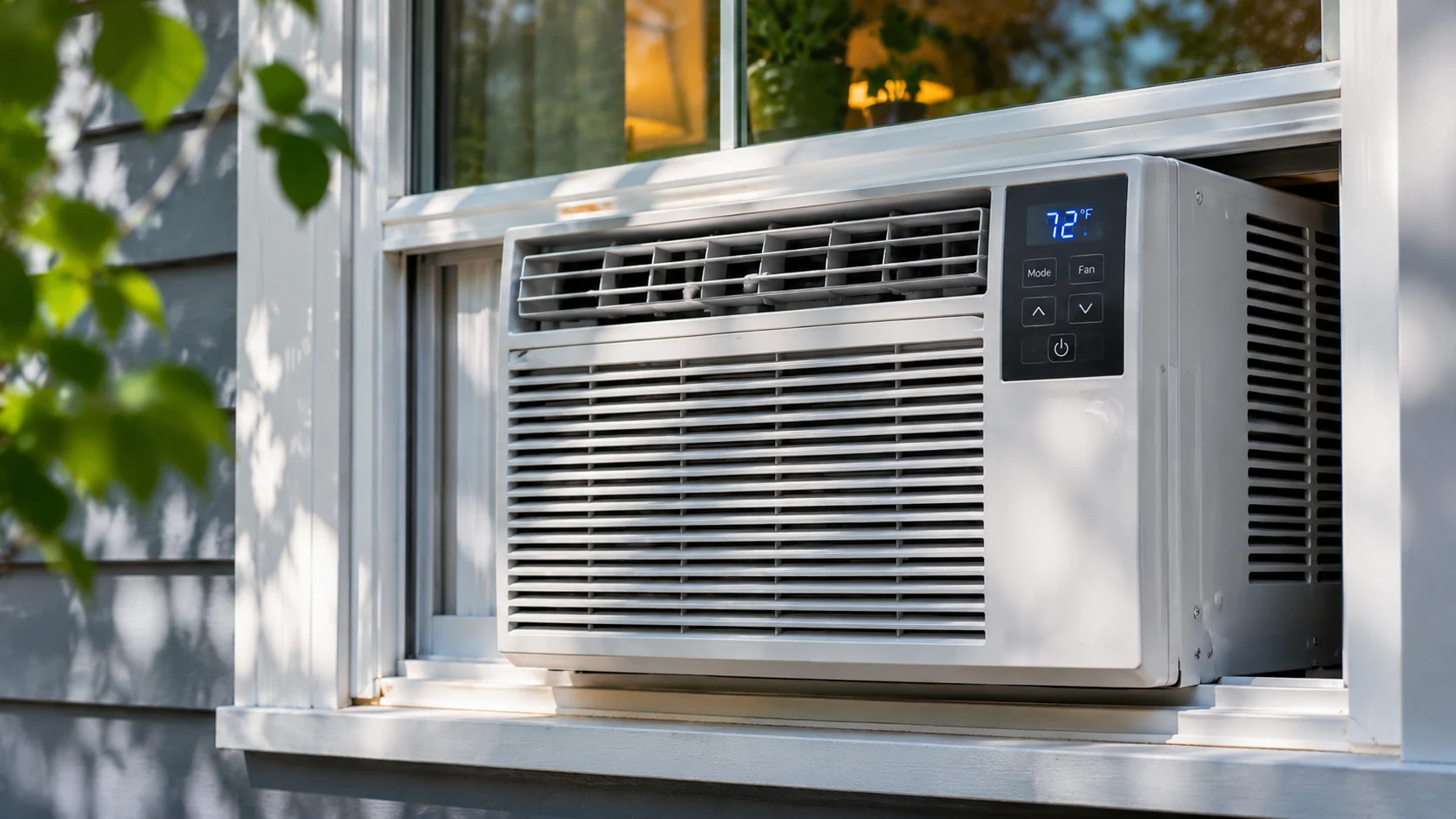
An air conditioner drawing an average of 1,000 watts for six hours uses 6 kWh. At an illustrative $0.18/kWh, that is $1.08 per day, or $32.40 over 30 days with the same pattern. The difficult part is estimating actual electrical input: a unit's cooling capacity in BTU per hour is not the same as watts drawn from the outlet.
Cooling capacity is not electricity use
An AC advertised as 12,000 BTU/h is rated for cooling output. That doesn't mean it draws 12,000 watts. The energy efficiency ratio (EER) relates cooling capacity to electrical power under specified test conditions:
Approximate input watts = cooling capacity (BTU/h) ÷ EER.
For example, a 12,000-BTU/h unit with an EER of 12 would draw approximately 1,000 watts under the relevant rated condition. EER is not the same as CEER, SEER2 or the seasonal performance of an inverter-driven system. These metrics use different test methods and should not be substituted in the same formula without care. A manufacturer specification for input watts or a suitable energy measurement is generally preferable for a personalized calculation.
Compare running scenarios, not generic AC stereotypes
The table uses assumed average electrical draw while active at $0.18/kWh. It does not claim that every window, portable, mini-split or central system has the listed power.
| Illustrative operating draw | Active hours/day | 30-day kWh | 30-day energy cost |
|---|---|---|---|
| 600 W | 6 | 108 | $19.44 |
| 1,000 W | 6 | 180 | $32.40 |
| 1,800 W | 6 | 324 | $58.32 |
| 3,000 W | 6 | 540 | $97.20 |
A real system can draw different power at startup, high cooling demand, part-load operation and fan-only mode.
Why duty cycle and weather matter
A single-speed compressor may run only part of the time that the thermostat is on. An inverter model can run longer at reduced power. A practical energy estimate must use average watts over elapsed time or the sum of energy consumed across operating modes—not simply maximum rated wattage multiplied by all hours the thermostat is enabled.
Outdoor temperature, humidity, solar gain, insulation, thermostat setting, room size and air leakage affect cooling demand. Poorly sized equipment can also operate inefficiently or fail to control humidity well. Portable ACs vary in design, and their exhaust setup can change real-world performance.
How to estimate your own AC bill
If you know average running watts, use:
Monthly energy cost = watts ÷ 1,000 × equivalent full-power hours/day × days × rate.
For a variable-speed system, measured kWh over several representative days is better. A whole-home smart meter can sometimes help compare days with similar weather, though other household changes make such comparisons approximate.
About the examples: Dollar amounts in this guide use explicitly stated sample rates, not a claim about your local utility's current price. Electric rates, taxes, fees, and usage patterns differ. For context, the U.S. Energy Information Administration reports a residential average revenue of 18.19 cents per kWh for January–August 2026; that national aggregate is not a substitute for your bill's marginal rate. EIA, Electric Power Monthly.
Ways to reduce cooling energy without sacrificing comfort
Reduce unwanted heat entering the home: use effective window shading, address air leaks and maintain appropriate insulation. Keep filters and outdoor equipment maintained according to manufacturer instructions. Avoid blocked vents and do not assume that an extreme thermostat setting cools a room faster. In humid climates, evaluate both comfort and humidity rather than temperature alone.
Replacing equipment can reduce electricity use when the new unit is appropriately sized and more efficient, but installation cost and local operating conditions determine payback. Compare relevant efficiency ratings within the same equipment category.
For personal calculations, use the AC Running Cost Calculator. If you're investigating a summer bill spike, follow the high electric bill checklist. Separate articles on window and central AC can later cover model-specific details without overloading this overview.