
Heating & Natural Gas
How Much Does It Cost to Heat a House?
Home size, climate, fuel and equipment efficiency — what actually sets your winter heating bill.
3 min read
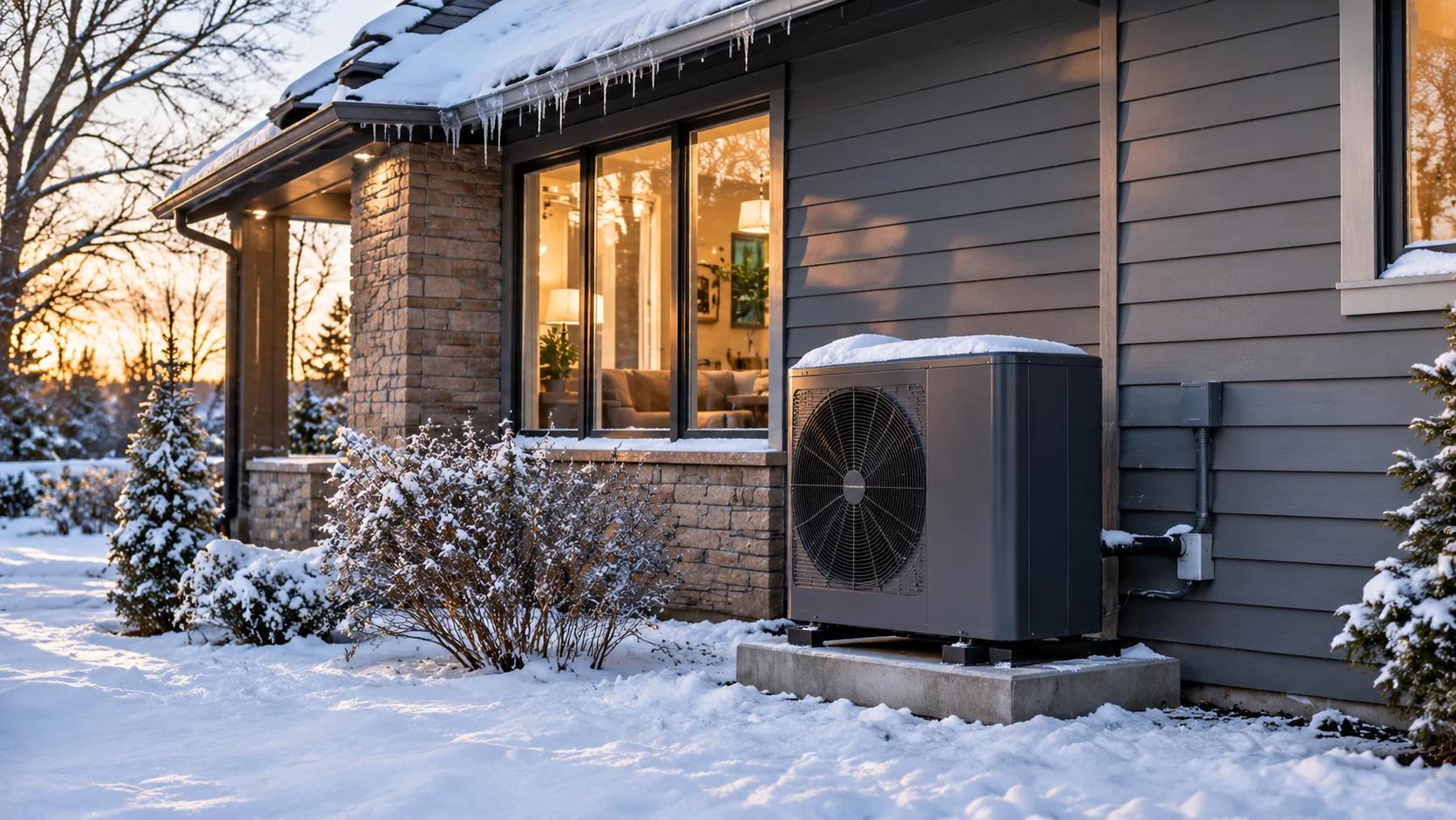
There is no honest single dollar figure for heating an American home. Heating cost depends on how much heat the building loses, how cold the weather gets, the temperature you maintain, your equipment's efficiency and what you pay for energy. Two similarly sized houses can have dramatically different winter bills because of insulation, leakage, climate and heating systems.
A useful estimate starts with useful heat delivered to the home, then works backward to fuel or electricity consumed.
Three variables that determine the result
Heating demand: The quantity of heat needed to replace heat escaping through walls, windows, roofs and air leaks. System performance: How much purchased energy is converted into or moved as usable heat. Energy price: Your local electricity rate or natural-gas price, including relevant variable delivery charges.
Square footage is a clue, not a complete model. A compact well-insulated house may use less heat than a smaller leaky one. A mild coastal winter is not equivalent to a northern continental winter. Real heating estimates often use local weather and building characteristics such as heating degree days.
Compare fuels using the same heat requirement
Suppose a house needs 10 million BTU of useful heat over a particular period. This is a hypothetical heating demand, not a monthly national average. One kWh equals about 3,412 BTU, while one therm equals 100,000 BTU of fuel heat content.
| System | Assumed performance | Input needed for 10 million useful BTU |
|---|---|---|
| Electric resistance | 100% site conversion | 2,931 kWh |
| Heat pump | Seasonal COP 2.5 | 1,172 kWh |
| Gas furnace | 90% AFUE, simplified | 111.1 therms |
At $0.18/kWh and $1.50/therm (both illustrative variable prices), the resulting energy charges are approximately $527, $211, and $167, respectively. These are not universal rankings or whole winter bills. They exclude fixed service charges, installation, maintenance and any extra energy used by auxiliary equipment or fans. A heat pump's seasonal COP changes by climate and operating conditions.
This comparison illustrates why the cost of one kWh and the cost of one therm cannot be compared directly: they contain different amounts of energy and different systems deliver different useful heat.
Electric resistance, heat pumps and gas furnaces
Electric baseboards and portable heaters convert the electrical energy they use into heat in the conditioned space. They can be simple to install but may have higher operating costs where electricity is expensive. Heat pumps move heat; their efficiency is conventionally expressed by a coefficient of performance (COP), which can exceed 1. Gas furnaces burn fuel; AFUE approximates the share of fuel energy converted into useful seasonal heat under a standard rating procedure. Their electric blowers consume additional power.
System sizing and distribution matter. Leaky ducts, poorly balanced airflow and an inappropriate thermostat schedule can change actual costs. A high-efficiency unit does not automatically produce a low bill if the house loses substantial heat.
Build a reliable home-specific estimate
First, identify your heating equipment and fuel. Next, gather past winter kWh or therm usage, ideally compared with a mild month to approximate a non-heating baseline. Review utility prices and billing periods. If your equipment is shared with water heating or cooking, that baseline will be imperfect. For a prospective upgrade, seek a heating-load calculation and estimates based on local climate rather than assuming every house of a given square footage needs the same heating power.
About the examples: Dollar amounts in this guide use explicitly stated sample rates, not a claim about your local utility's current price. Electric rates, taxes, fees, and usage patterns differ. For context, the U.S. Energy Information Administration reports a residential average revenue of 18.19 cents per kWh for January–August 2026; that national aggregate is not a substitute for your bill's marginal rate. EIA, Electric Power Monthly.
Improvements to consider before replacing equipment
Air sealing, insulation and controlled ventilation can reduce the heat a home must replace. Maintaining equipment and changing filters as directed can protect performance. Thermostat setbacks may reduce demand, although systems with heat pumps or auxiliary heating need appropriate control strategies. Compare installed cost and long-term operating cost when evaluating replacements.
Use the Home Heating Cost Calculator to compare assumptions for your house. For a single portable heater, our space heater running-cost guide gives a simpler calculation. To understand how gas appears on a utility statement, see how to calculate your natural gas bill.
The most actionable result isn't an unsupported national average. It's a range for your house that shows which assumptions matter most.
Sources and further reading
More on heating & natural gas
Heating & Natural Gas
How Much Does It Cost to Run a Space Heater?
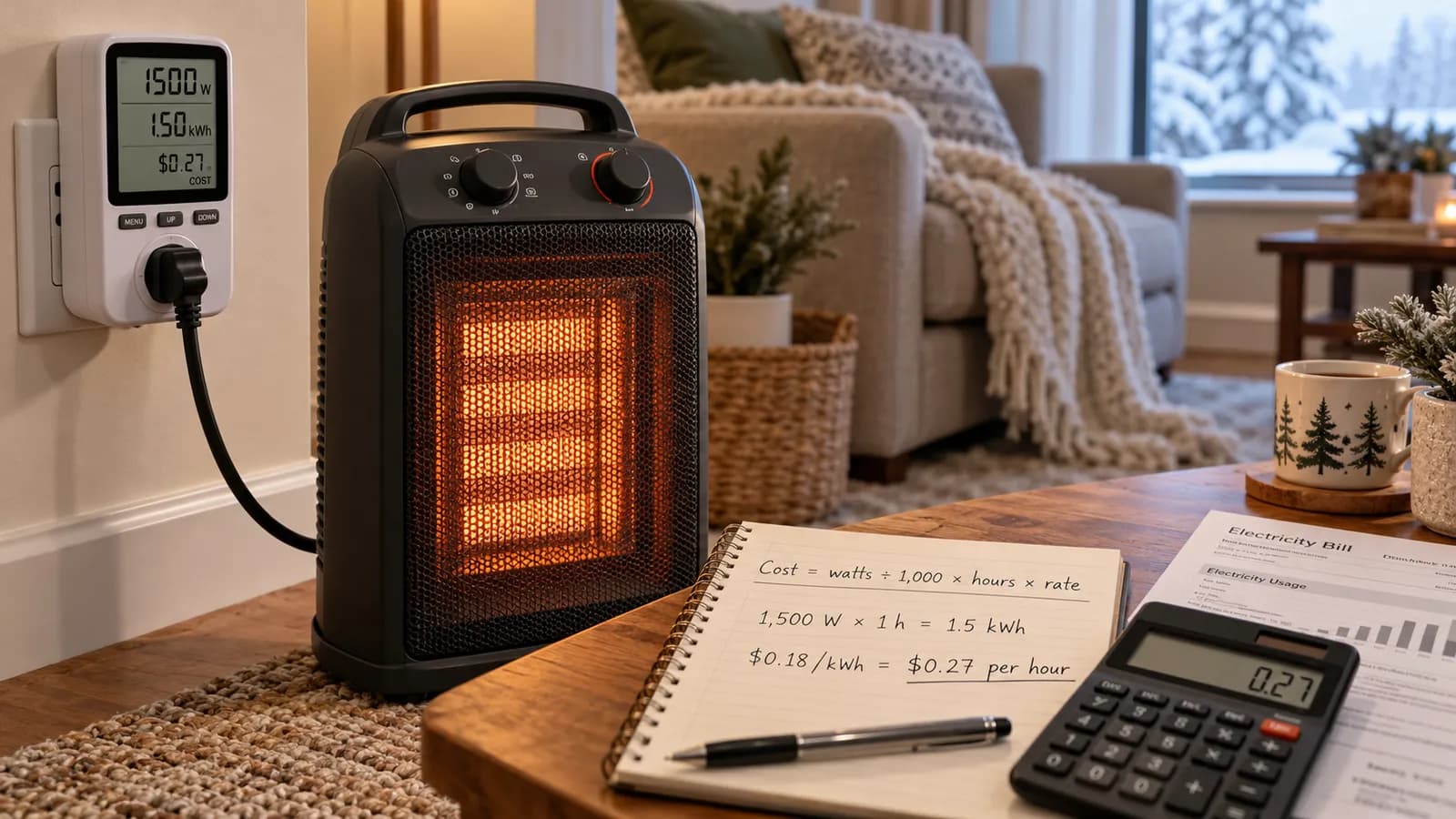
What a 1,500-watt heater really costs per hour, day and winter — and how the thermostat changes the math.
3 min read
Heating & Natural Gas
How to Calculate Your Natural Gas Bill
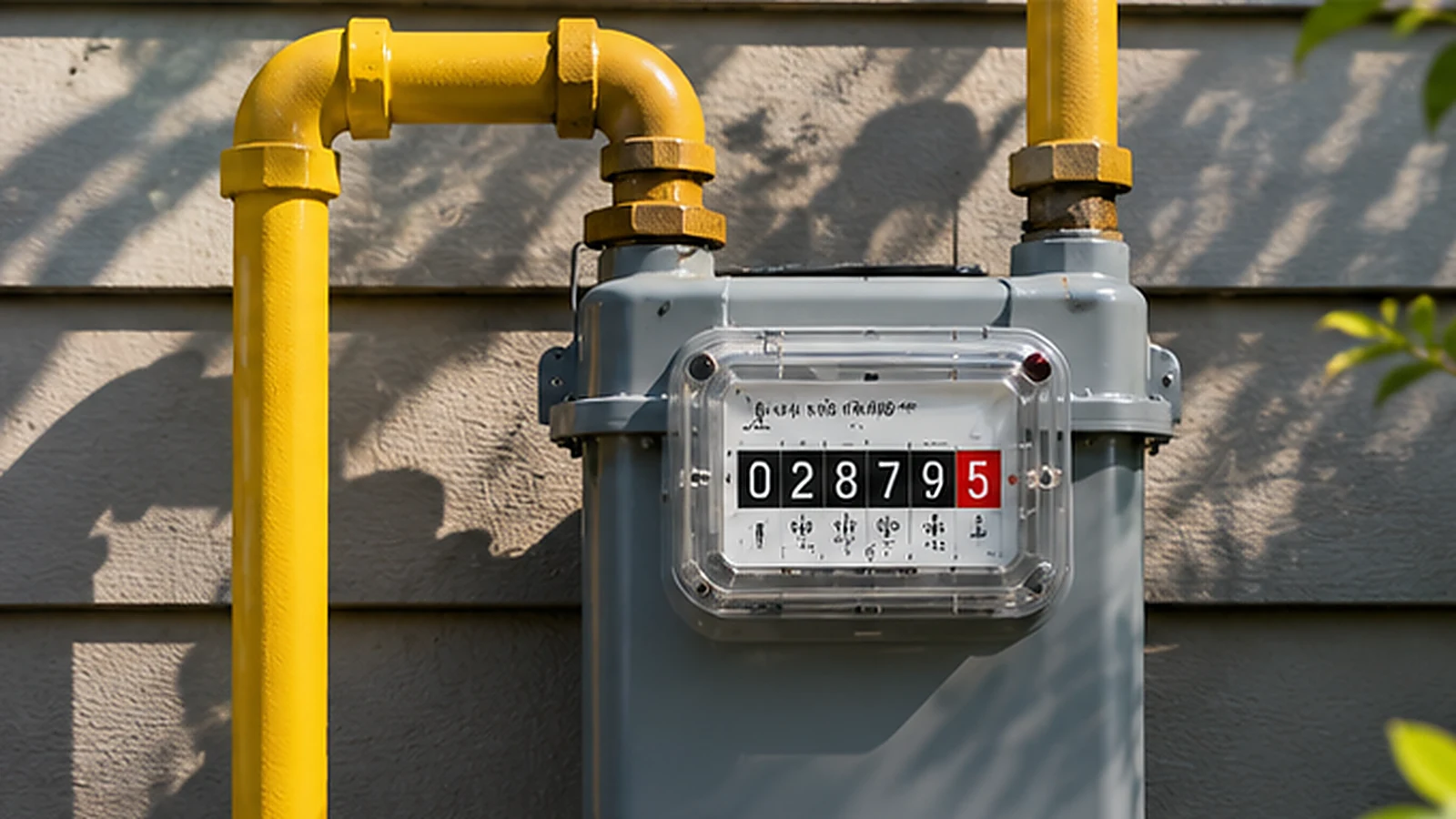
Therms, CCF and meter readings explained, with the fixed charges that set your bill's floor.
3 min read