
Backup Power & Outages
How Much Does It Cost to Run a Generator per Hour?
Fuel cost per hour, cost per kWh and why generator load matters — with gallon and liter examples.
6 min read
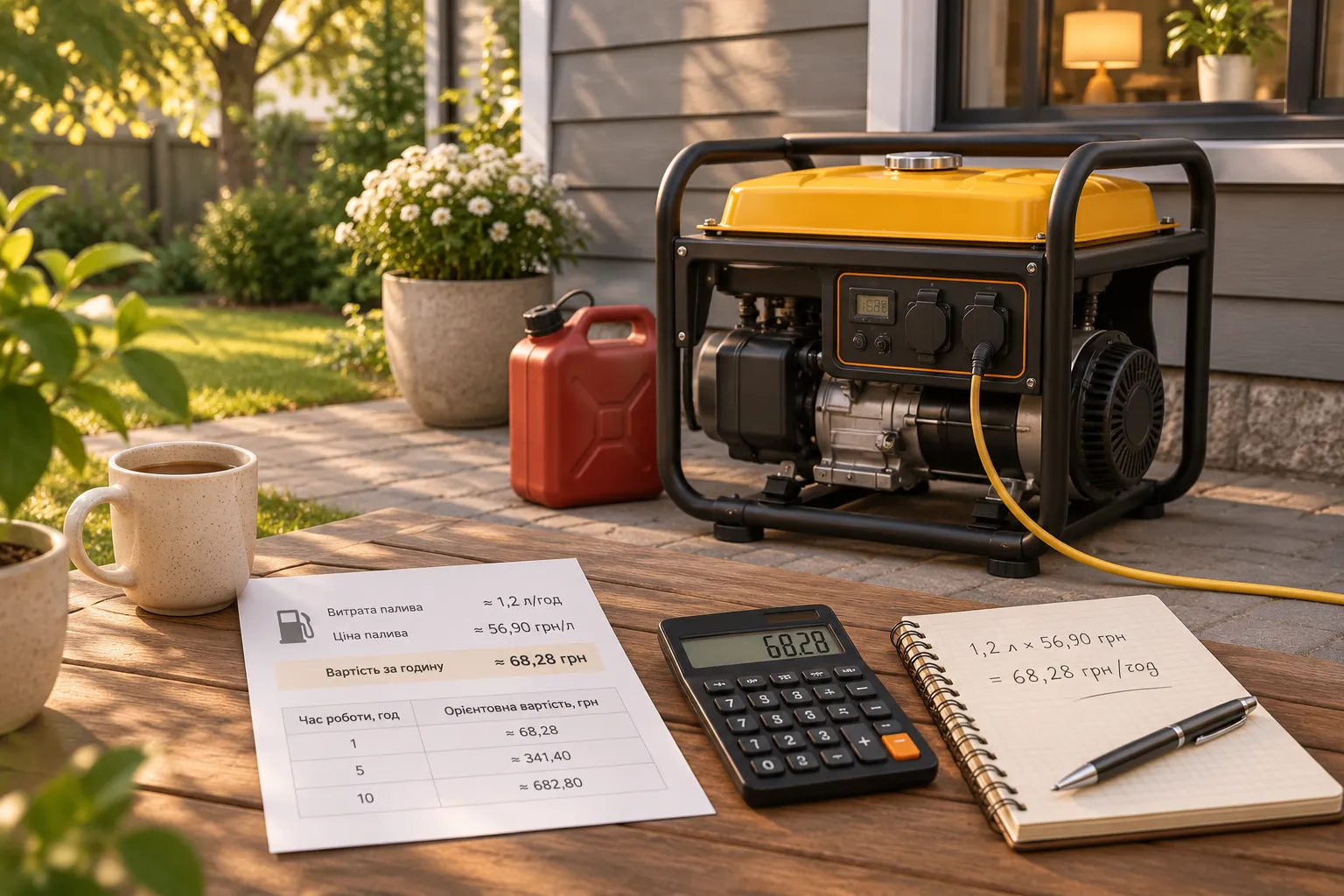
The cost of running a generator depends on two main factors: how much fuel it burns and how much that fuel costs.
A generator's rated wattage tells you how much electrical power it can provide. It does not tell you how much fuel it will consume in every operating condition. A 5,000 W generator running a few lights and a router may use a different amount of fuel than the same generator powering a refrigerator, pump, and several other appliances.
To calculate operating expenses accurately, you need the generator's fuel consumption at the load you expect to use.
The basic generator fuel cost formula
For a gasoline or diesel generator, the calculation is straightforward:
Hourly fuel cost = Fuel consumption per hour × Fuel price per unit
For example, assume a generator consumes 0.45 gallons of gasoline per hour, and gasoline costs $4.00 per gallon:
0.45 × $4.00 = $1.80 per hour
These are example inputs, not a claim about current fuel prices or a specific generator's consumption.
If you operate the generator for eight hours:
$1.80 × 8 = $14.40
If that happened every day for 30 days:
$14.40 × 30 = $432
That would be the fuel cost alone. Maintenance, oil changes, equipment wear, and the original purchase price are separate expenses.
Why generator load matters
Generator fuel consumption changes with electrical load, but it does not necessarily increase in direct proportion to the power delivered. The engine consumes fuel even when the electrical demand is low.
As a result, a generator operating far below its rated capacity may deliver electricity at a relatively high cost per kilowatt-hour.
For the most useful estimate, look for the manufacturer's fuel consumption information at different load levels. Specifications may provide operating times at 25%, 50%, or 100% load. If the manufacturer provides tank capacity and runtime at a specified load, you can estimate average consumption at that load:
Fuel consumption per hour = Fuel tank capacity ÷ Runtime
For example, a generator with a 3-gallon tank and a stated runtime of 6 hours at half load would consume approximately:
3 ÷ 6 = 0.5 gallons per hour
That estimate is specific to the manufacturer's stated test conditions. It should not automatically be applied to every load level.
How to calculate the price per kWh
Hourly operating cost is useful, but it does not tell you how expensive the generator's electricity is. To compare generator output with electricity purchased from the grid, calculate the cost per kilowatt-hour:
Generator fuel cost per kWh = Hourly fuel cost ÷ Average electrical output (kW)
Return to our example:
- Fuel consumption: 0.45 gallons per hour
- Gasoline price: $4.00 per gallon
- Average electrical output: 1.5 kW
The generator costs $1.80 per hour in fuel. If it delivers 1.5 kWh of electricity during that hour:
$1.80 ÷ 1.5 = $1.20 per kWh
The result is a fuel-only cost of $1.20 per kilowatt-hour. This example illustrates why generator electricity can be considerably more expensive than grid electricity. However, the comparison depends on the generator, actual load, fuel price, and local electricity tariff. It should not be treated as a universal price difference.
A generator's maximum rated capacity is not the same as its average delivered output. Using the rated capacity in this formula when the generator is only partly loaded would underestimate the cost per kWh.
Gasoline, diesel, and propane generators
Portable generators can operate on different fuels, and each fuel has its own consumption characteristics.
- Gasoline generators are common in portable applications. Their operating costs depend on engine efficiency, actual load, and local gasoline prices.
- Diesel generators are used across a wide range of backup and commercial applications. Compare them using the manufacturer's fuel consumption data rather than assuming every diesel generator is more economical.
- Propane generators may offer a different fuel-storage and operating arrangement. Prices can be quoted per gallon, pound, cylinder, or another unit, so it is important to use the correct conversion.
When comparing models, avoid using a fuel price from one unit system with a consumption rate from another. For example, liters per hour must be multiplied by a price per liter, not by a price per US gallon.
Cost example using liters
The same calculation works in countries where fuel is sold by the liter. Suppose a generator consumes 1.2 liters per hour and fuel costs 60 currency units per liter. The hourly fuel cost is:
1.2 × 60 = 72 currency units per hour
For six hours of operation:
72 × 6 = 432 currency units
If the average electrical output during operation is 2 kW:
72 ÷ 2 = 36 currency units per kWh
These are purely illustrative numbers. Replace them with current local fuel prices and the generator's actual consumption.
What makes a generator expensive to operate?
Several factors can increase running costs. A generator that is much larger than the connected load may be operating inefficiently. An older or poorly maintained engine may also consume more fuel than expected.
Operating conditions matter as well. Different generators respond differently to changing loads, and their fuel consumption can vary with engine type, fuel type, maintenance, and other conditions.
For a realistic estimate, use the manufacturer's consumption figures and adjust them when you have actual operating measurements. Be cautious about applying one generic liters-per-hour figure to every generator of a similar size.
Generator or portable power station?
A fuel-powered generator and a battery power station serve related but different purposes.
A portable power station stores electricity and can provide quiet backup power without combustion exhaust during use. Its operating time is limited by its available battery energy unless it can be recharged.
A generator produces electricity while fuel is available, but it requires safe outdoor placement, fuel handling, maintenance, and ongoing operating expenses.
For relatively small loads such as internet equipment, laptops, and lighting, a battery system may be more convenient. For extended operation of larger electrical loads, a properly selected generator may be more practical. The right choice depends on the building, available outdoor space, electrical requirements, expected outage duration, and whether the equipment can be operated safely.
Generator safety cannot be separated from cost
Portable fuel-powered generators produce carbon monoxide, an invisible and potentially deadly gas.
Never operate a generator inside a home, apartment, garage, basement, enclosed space, or on an apartment balcony.
The US Centers for Disease Control and Prevention advises placing generators outdoors more than 20 feet from doors, windows, and vents, and using working carbon monoxide detectors. Ukraine's State Energy Supervision Inspectorate also warns against generator use inside apartment buildings, including on balconies, and recommends outdoor placement at least six meters from windows, doors, and garages.
Do not connect a generator to household wiring by plugging it into a regular wall outlet. This can backfeed electricity into the distribution network and create an electrocution hazard. Building connections require suitable switching equipment and qualified electrical installation.
Fuel handling and electrical safety instructions from the manufacturer must always be followed. For an apartment without a safe, permitted outdoor generator location, a combustion generator may not be a suitable backup option.
Calculate the cost before buying
A generator's purchase price is only one part of its total cost. The more useful comparison includes hourly fuel consumption, cost per kilowatt-hour, expected daily operating hours, maintenance, and whether the generator can safely support your essential appliances.
Start with the manufacturer's fuel consumption figures, then use the current fuel price in your area.
Estimate your generator expenses
The Generator Fuel Cost Calculator lets you estimate hourly fuel costs, daily expenses, and the cost per kWh for gasoline, diesel, and propane generators. For a backup setup that combines different appliances, use the Backup Power Planner to estimate the required electrical load before choosing equipment.
Sources and further reading
More on backup power & outages
Backup Power & Outages
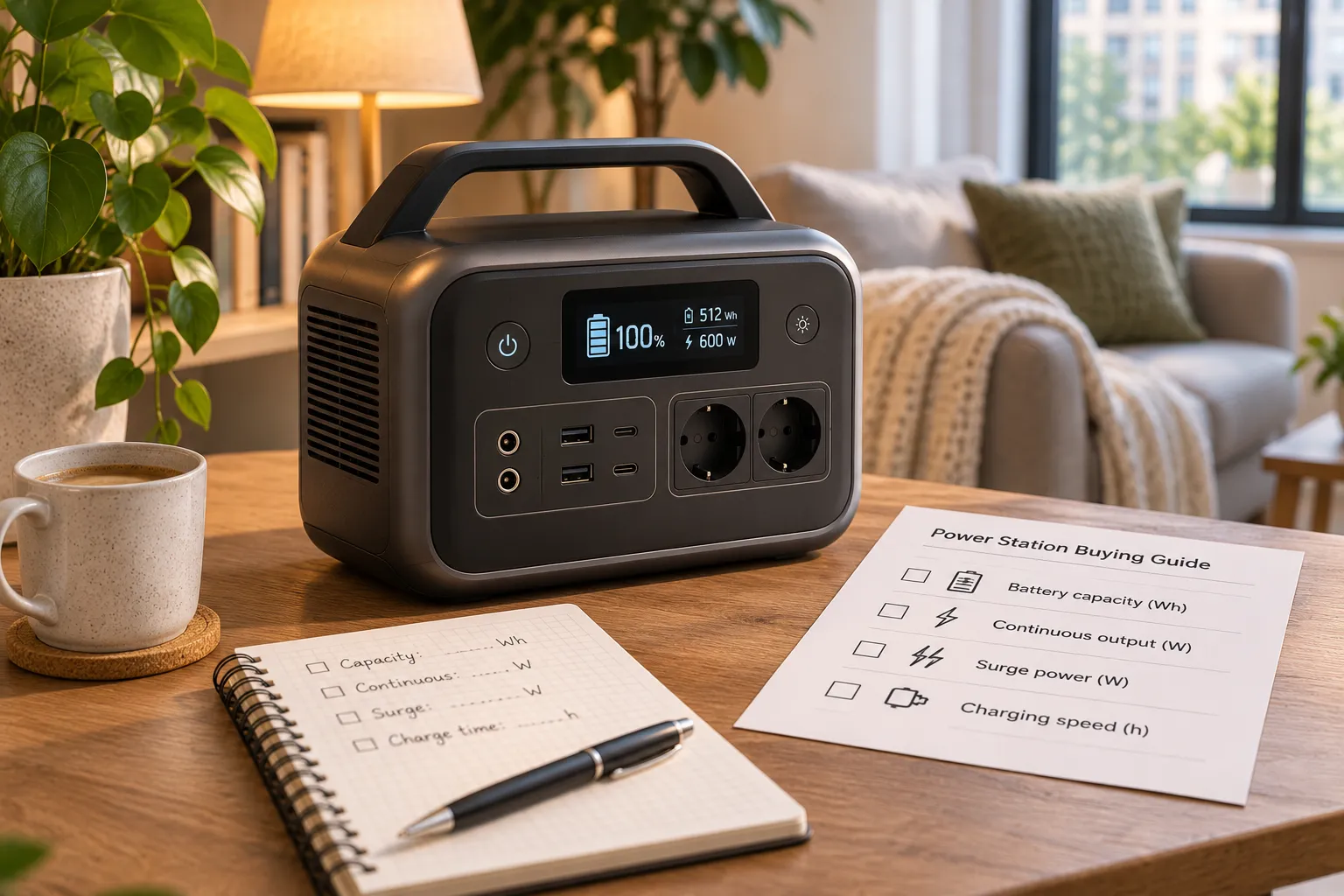
How to Choose a Portable Power Station for an Apartment
Battery capacity, continuous output, surge power and charging speed: what to check before you buy.
6 min read
Backup Power & Outages
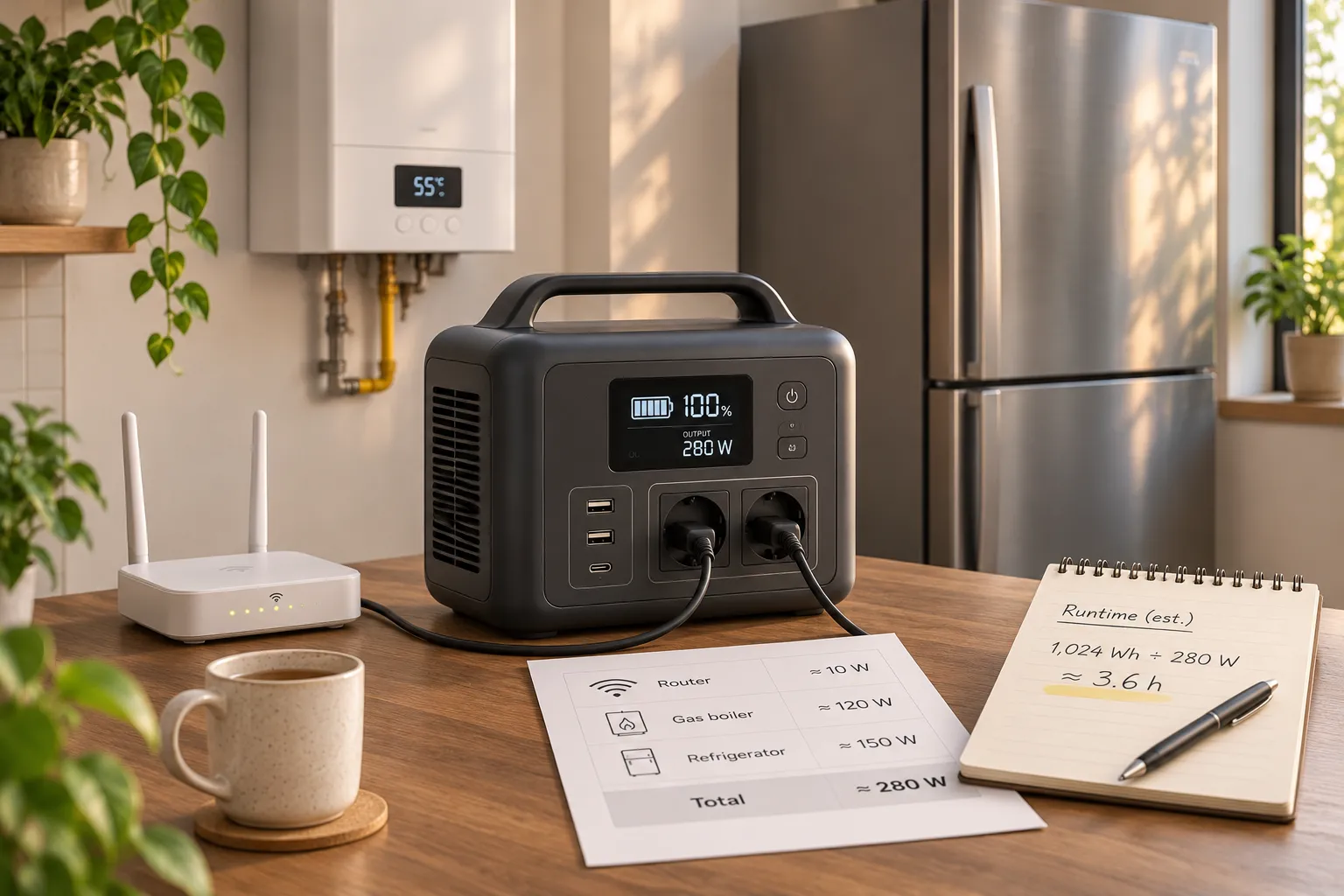
How Long Will a Router, Boiler, and Refrigerator Run on a Power Station?
A worked example with battery losses, appliance cycling and startup power — for 1,024 Wh and 2,048 Wh stations.
5 min read