
Water & Laundry
How to Calculate Your Water and Hot Water Costs
Reading a water bill in gallons or CCF, tiered rates and sewer charges — plus what heating the water costs.
3 min read
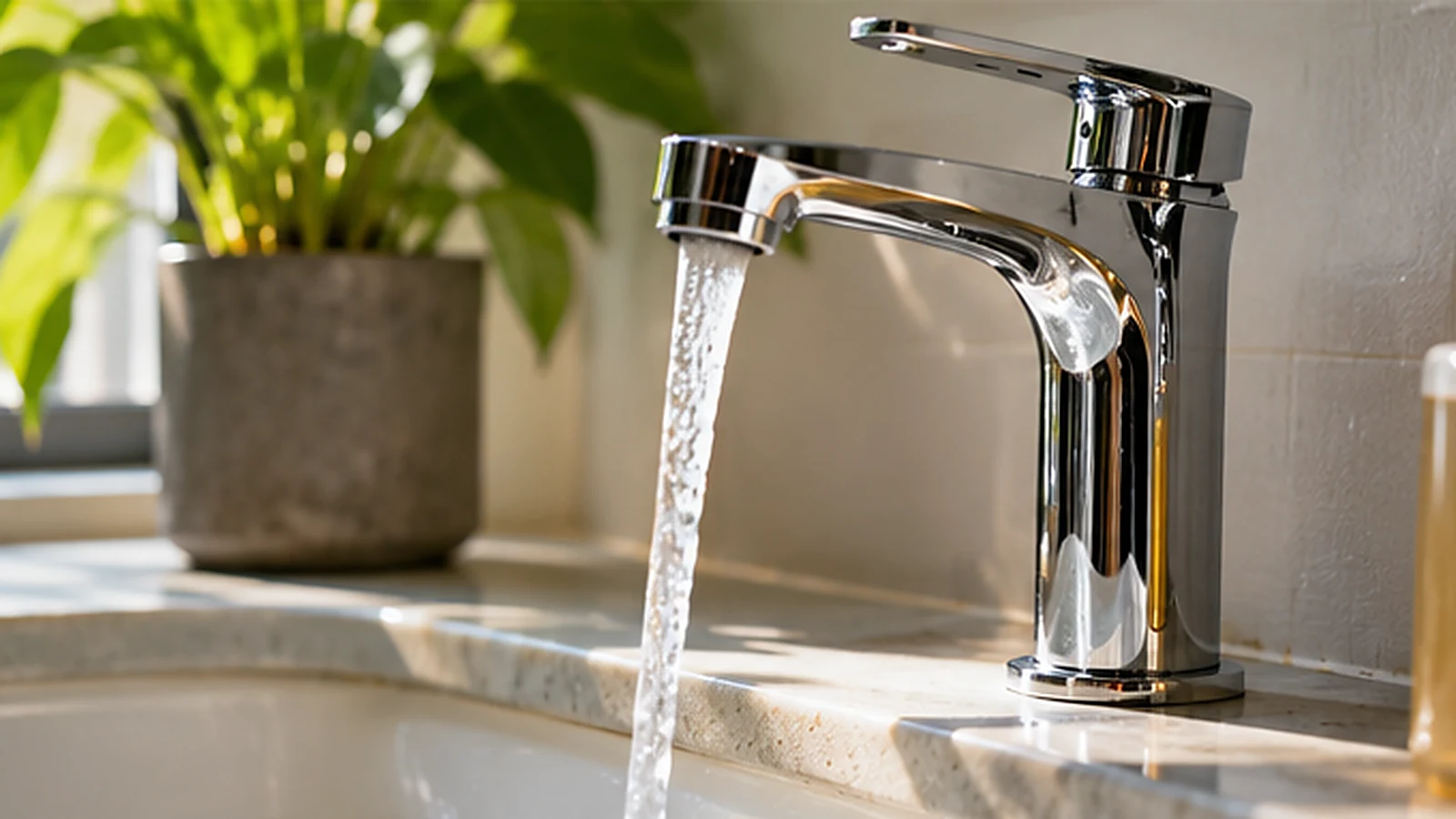
Water costs are really two calculations: the charges for water and sewer service, and the energy required to make some of that water hot. A shorter shower can reduce all three variable costs, but your bill may also include fixed service charges that remain unchanged. Start by identifying which units your utility uses.
Decode gallons, CCF and billing units
A CCF (sometimes written Ccf) is 100 cubic feet of water, equal to approximately 748 gallons. A water bill might charge per 1,000 gallons, per CCF, or according to increasing consumption tiers. Read the rate schedule rather than assuming all gallons have the same price.
Suppose your utility charges an illustrative $6 per CCF for water and $5 per CCF for sewer, both as flat variable rates. Using 4 CCF in a billing cycle is about 2,992 gallons and produces variable charges of $24 for water plus $20 for sewer = $44. Fixed fees, minimums, taxes and local billing rules can increase the actual statement.
If your utility uses tiers, allocate consumption across each tier. For example, first 3 CCF at $5/CCF plus the next 2 CCF at $7/CCF produces a $29 water usage charge for 5 CCF, before sewer and fixed charges. Simply multiplying all 5 CCF by the highest tier would be wrong under this example structure.
What does a shower cost in water alone?
A shower using 2 gallons per minute for 10 minutes consumes 20 gallons. At an illustrative combined water-and-sewer variable price of $0.012 per gallon, the volume charge is $0.24. EPA WaterSense-labeled showerheads must use no more than 2.0 gallons per minute under the applicable test requirements, but your fixture's actual flow is what matters for a specific calculation.
A lower-flow fixture can reduce gallons without shortening shower time. To estimate its volume savings, multiply the difference in gallons per minute by minutes of use, number of showers and marginal per-gallon utility charge.
Now calculate the energy to heat water
For water, an approximate sensible-heat calculation in U.S. units is:
BTU of useful heat = gallons × 8.34 pounds/gallon × temperature rise (°F).
To heat 20 gallons of water from 60°F to 105°F, the temperature rise is 45°F. That requires approximately 7,506 BTU, equivalent to 2.20 kWh of useful heat. At $0.18/kWh, that is about $0.40 for an ideal electric resistance heater before equipment, tank and piping losses. If the shower mixes hotter water with cold water, a correctly measured total water volume and inlet-to-outlet temperature difference still describe the useful heat delivered at the fixture.
For a gas water heater, divide useful BTU by an appropriate efficiency assumption to estimate fuel BTU, then convert fuel energy to therms (100,000 BTU per therm). For heat-pump water heaters, the electric input depends on operating COP. Actual system standby losses and other usage may not be captured in a one-shower calculation.
Why one hot shower doesn't equal a slice of the monthly bill
Fixed water and sewer fees are not necessarily reduced by using a little less water. Some utilities bill sewer charges using winter water averages or different formulas, so changing outdoor water use may affect water and sewer bills differently. If your bill is unusually high, inspect leaks and confirm the billing period before attributing the increase to showers.
For budgeting, calculate monthly volumes and separately estimate water-heating energy. That avoids treating all water as hot, or treating every gallon as carrying the same sewer charge.
Use the Water Bill & Hot Water Calculator to model local volumes and rates. For a household-wide view, see how much utilities cost per month and the cost of doing laundry.
The key distinction is simple: water use is measured in volume; heating that water requires energy. A complete estimate prices both without counting the same charge twice.
Sources and further reading
More on water & laundry
Water & Laundry
How Much Does It Cost to Do a Load of Laundry?
Washer, water, hot water and dryer: the full cost of one load, and the settings that change it most.
3 min read