
Whole-Home Costs & Efficiency
How Much Do Utilities Cost per Month?
Electricity, gas, water and sewer for a typical home — what shapes the total and how to plan your budget.
3 min read
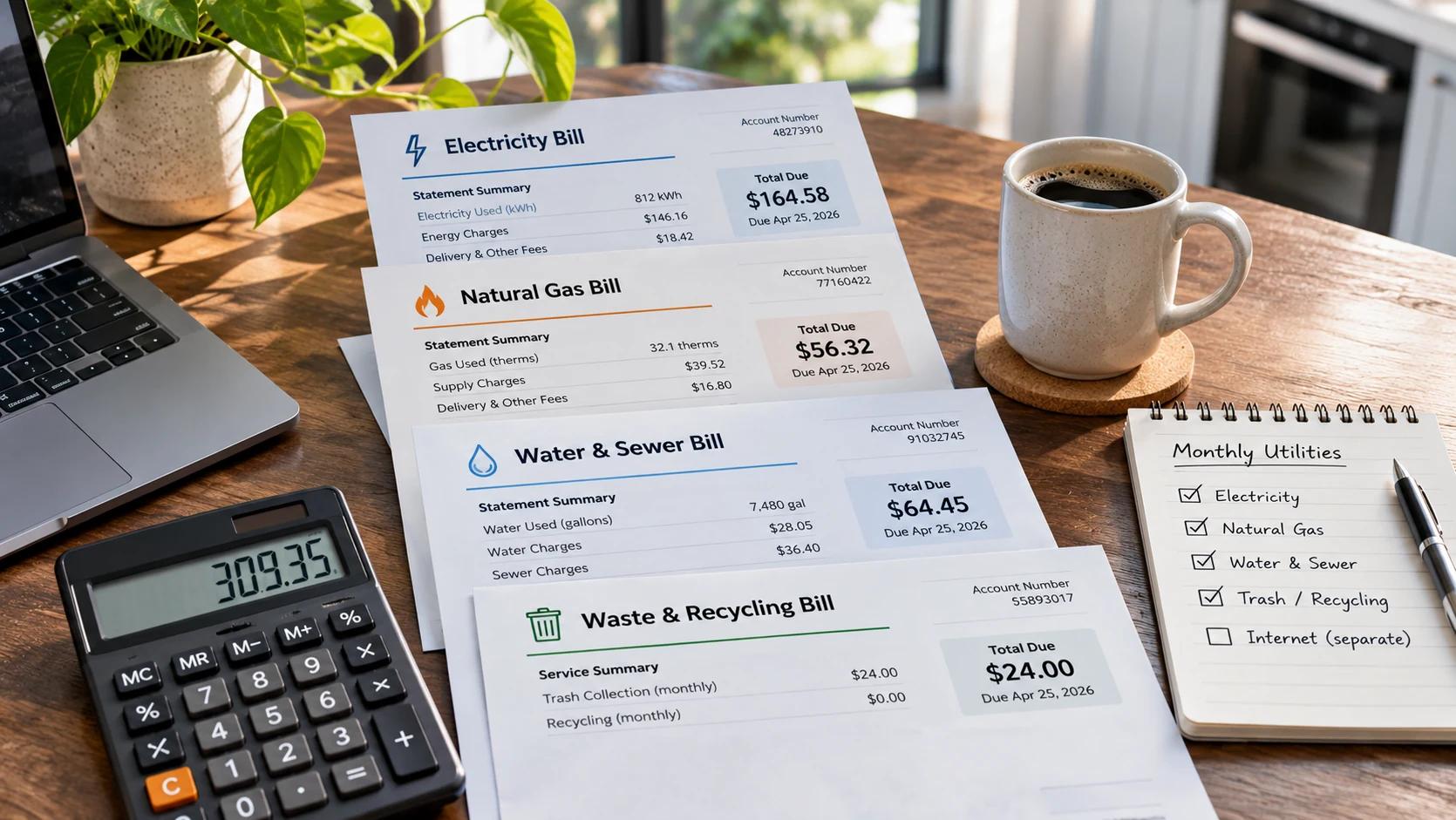
The monthly cost of home utilities isn't one universal American average. Electricity, natural gas, water, sewer and other services vary by location, household size, weather, building type and which bills a homeowner or renter actually pays. A reliable budget starts by listing each service, distinguishing fixed and usage-based charges, and looking at a full year instead of a single month.
What to include in a utilities budget
Begin with electricity, natural gas or another heating fuel, water and wastewater/sewer. Add trash collection if billed separately, and decide whether your personal budget also includes internet. Internet is a household expense, but it isn't a metered energy or water utility; keeping it separate makes comparisons clearer. Rent, mortgage payments, property taxes and insurance are housing expenses, not utility consumption.
For renters, check the lease. Water, sewer, heat or trash may be included in rent, separately metered, submetered or billed through a building-level allocation formula. A listing that says "utilities included" may not cover every service.
A sample budget you can replace with real numbers
This example is illustrative, not a claimed U.S. average or forecast:
| Monthly budget line | Example amount |
|---|---|
| Electricity | $125 |
| Natural gas | $65 |
| Water | $35 |
| Sewer | $30 |
| Trash collection | $20 |
| Total | $275 |
The sum is useful as a worksheet, not as a benchmark for your state. A household with electric heating may have no natural gas bill but higher electricity costs. Others have septic systems, shared water service, propane deliveries or seasonal irrigation charges.
Account for seasonal swings
Use at least 12 months of bills where possible. Cooling costs may rise in summer, while natural gas or electric heating can dominate winter. Water use can increase with outdoor irrigation, visitors or a leak. Instead of using last month's total as the "normal" monthly budget, calculate annual spending by category and divide by 12 to build a reserve for high-cost months.
Suppose total paid utility bills over a year add up to $3,360. The annualized monthly budget is $280. This doesn't imply that each bill will actually be $280. It tells you how much to set aside on average, before considering possible rate changes.
How to compare houses fairly
Use the same services and time period. A 1,200-square-foot apartment where heat and water are included in rent cannot be compared directly with a detached house where those costs appear as separate utility charges. Regional climate, household size, appliance fuel and efficiency also matter.
An EIA residential electricity price can help establish context, but price per kWh alone does not determine the bill: total kWh and tariff design matter. For your own spending, collect actual bills and measure what you pay rather than multiplying an average price by an assumed national consumption number.
Find costs you can actually influence
Split your budget into fixed charges and variable charges. You cannot usually eliminate a monthly service fee by using a few fewer gallons or kWh, but you may reduce charges tied to consumption. Large heating, cooling and water-heating loads deserve attention before minor standby devices. When shopping for upgrades, weigh purchase cost against defensible annual savings, not marketing claims.
Use the Total Home Utility Cost Calculator to assemble your household budget. For line-item troubleshooting, start with why your electric bill may be high, how to calculate a natural gas bill, or water and hot-water costs.
A good utilities budget won't be identical every month. It should explain which bills are predictable, which vary, and how much cushion your household needs when the seasons change.